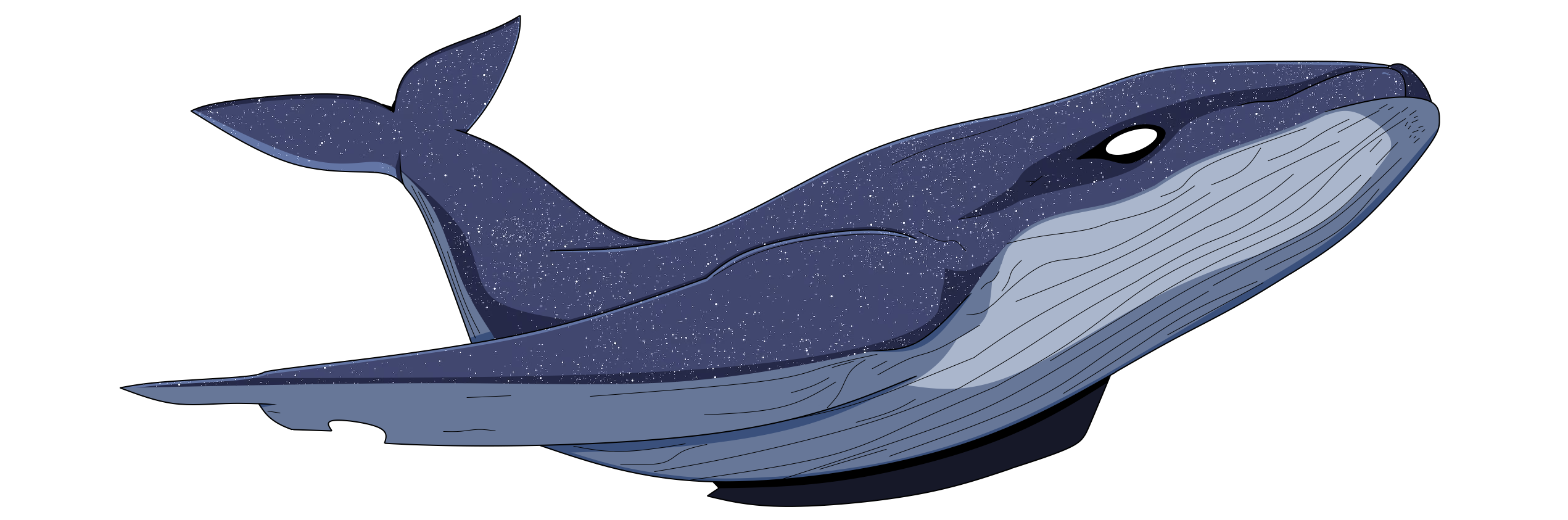
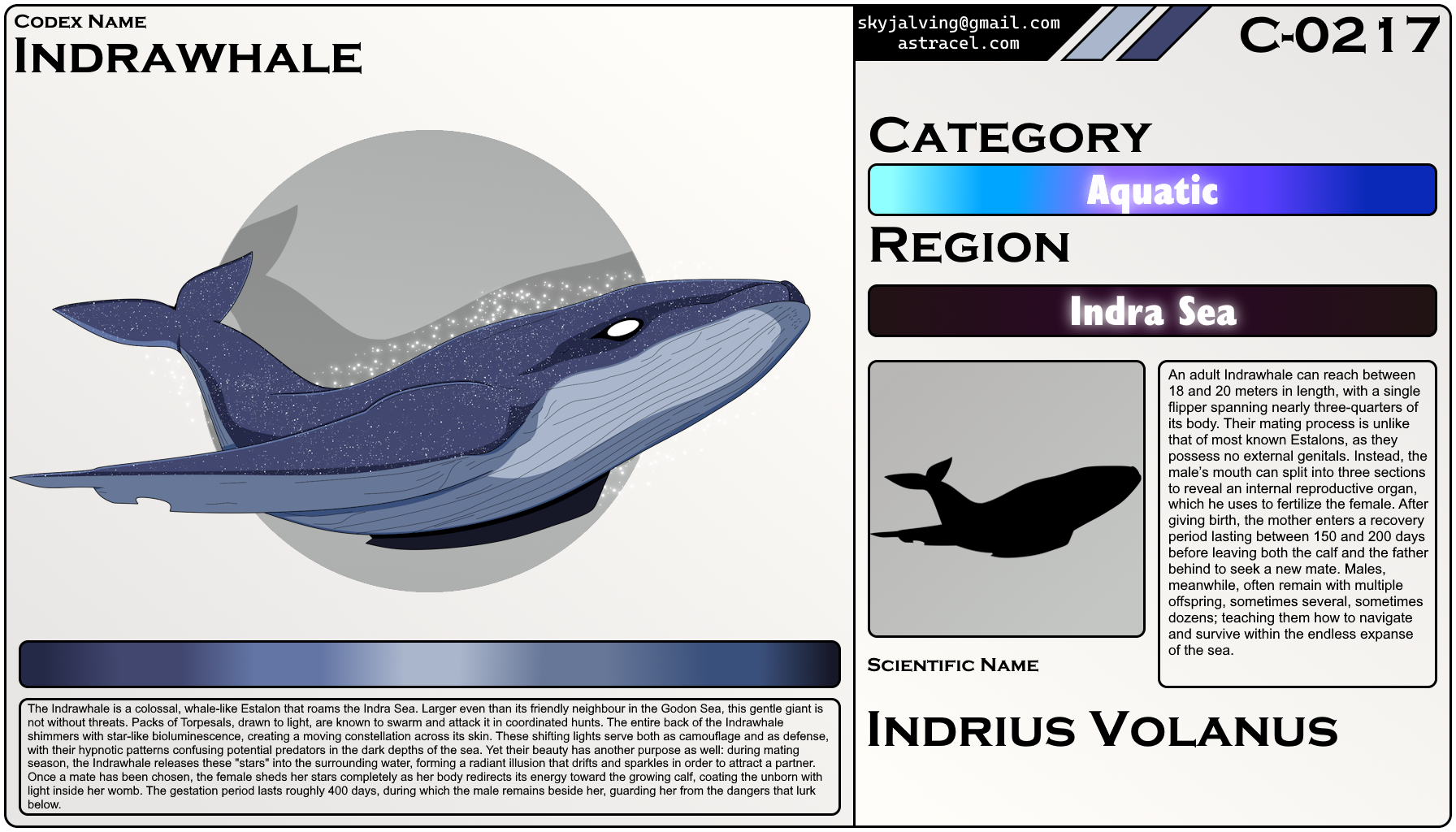
The Indrawhale is a colossal,
whale-like
Estalon that roams the
Indra Sea. Larger even than its
friendly neighbour in the Godon Sea, this gentle giant is not without threats. Packs of
Torpesals, drawn to light, are known to swarm and attack it in coordinated hunts. The entire back of the Indrawhale shimmers with star-like bioluminescence, creating a moving constellation across its skin. These shifting lights serve both as camouflage and as defense, with their hypnotic patterns confusing potential predators in the dark depths of the sea. Yet their beauty has another purpose as well: during mating season, the Indrawhale releases these "
stars" into the surrounding water, forming a radiant illusion that drifts and sparkles in order to attract a partner. Once a mate has been chosen, the female sheds her stars completely as her body redirects its energy toward the growing calf, coating the unborn with light inside her womb. The gestation period lasts roughly 400 days, during which the male remains beside her, guarding her from the dangers that lurk below.