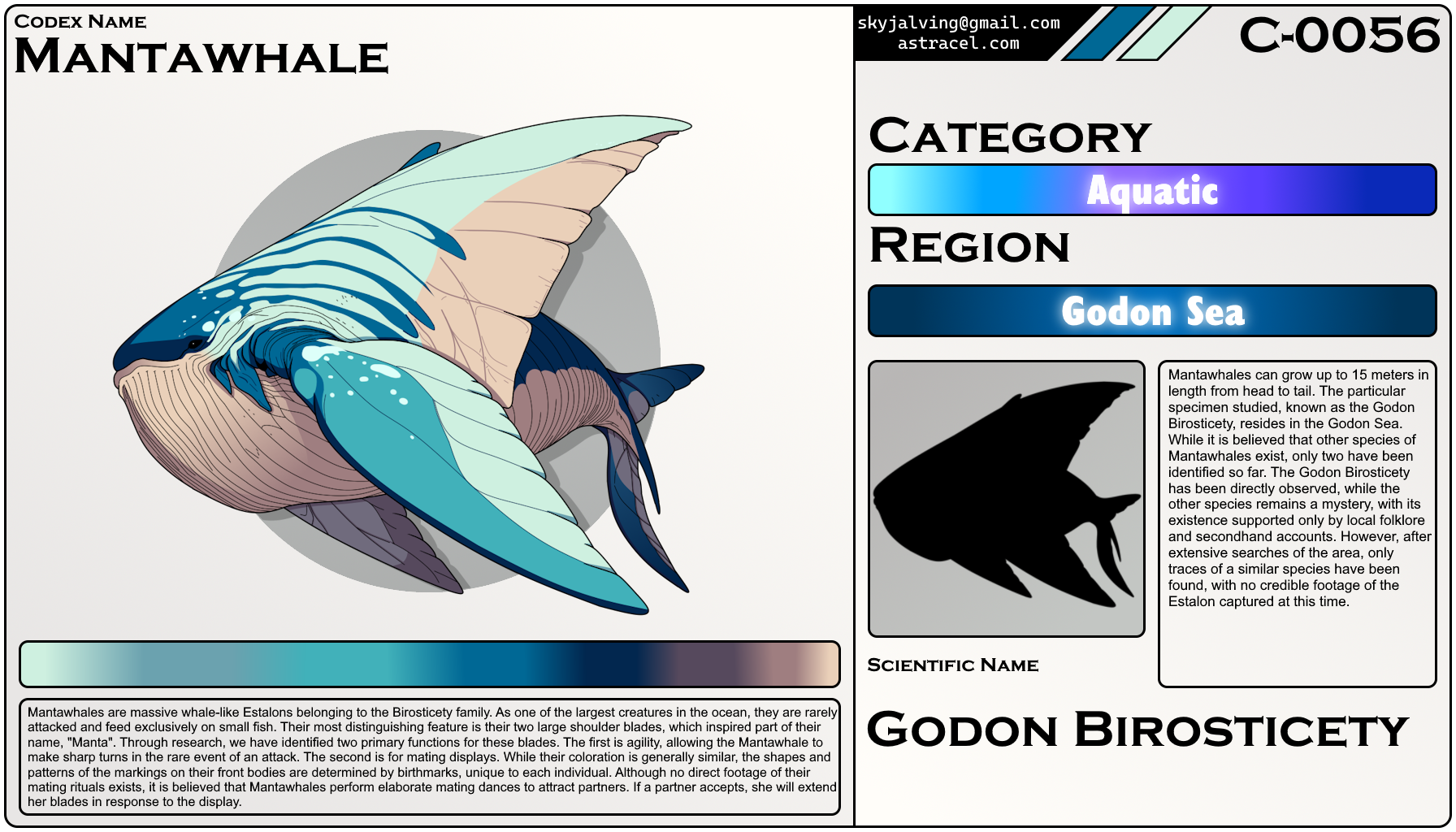
Mantawhales are massive
whale-like
Estalons belonging to the
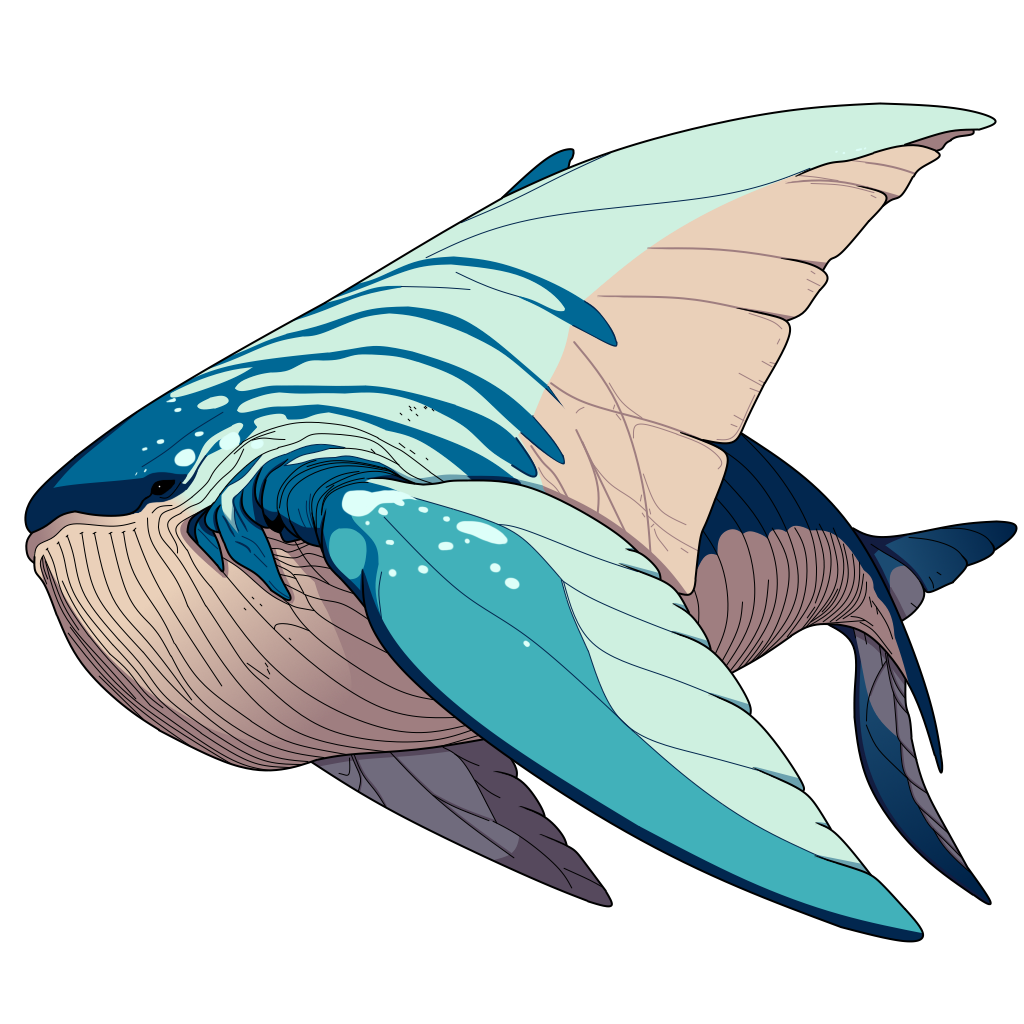
Birosticety family. As one of the largest creatures in the ocean, they are rarely attacked and feed exclusively on small fish. Their most distinguishing feature is their two large shoulder blades, which inspired part of their name, "Manta". Through research, we have identified two primary functions for these blades. The first is agility, allowing the Mantawhale to make sharp turns in the rare event of an attack. The second is for mating displays. While their coloration is generally similar, the shapes and patterns of the markings on their front bodies are determined by birthmarks, unique to each individual. Although no direct footage of their mating rituals exists, it is believed that Mantawhales perform elaborate mating dances to attract partners. If a partner accepts, she will extend her blades in response to the display.
Mantawhales can grow up to
15 meters in length from head to tail. The particular specimen studied, known as the Godon Birosticety, resides in the
Godon Sea. While it is believed that other species of Mantawhales exist, only two have been identified so far. The Godon Birosticety has been directly observed, while the other species remains a mystery, with its existence supported only by local folklore and secondhand accounts. However, after extensive searches of the area, only traces of a similar species have been found, with no credible footage of the
Estalon captured at this time.