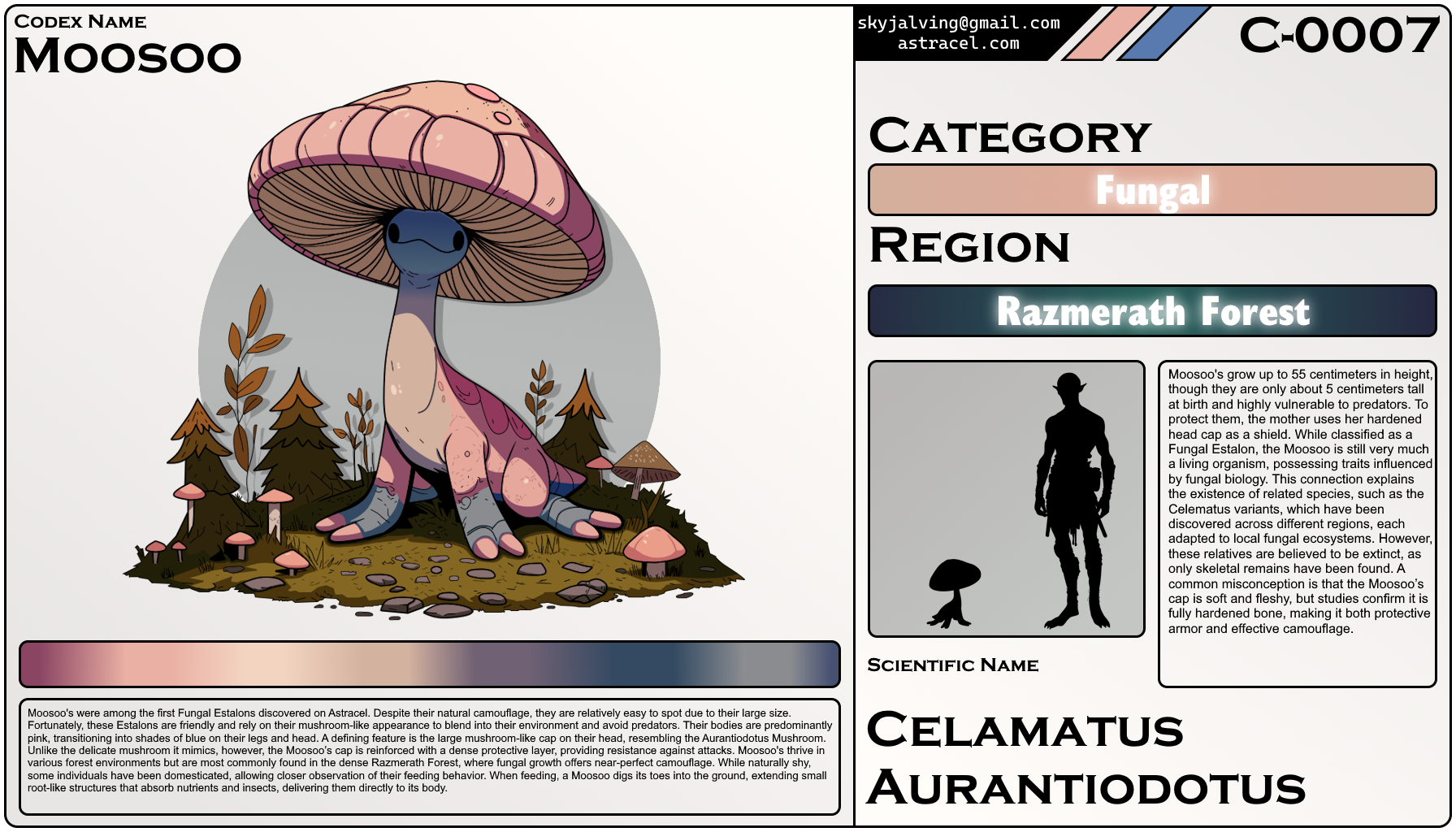
Moosoo's were among the first
Fungal Estalons discovered on
Astracel. Despite their natural camouflage, they are relatively easy to spot due to their large size. Fortunately, these
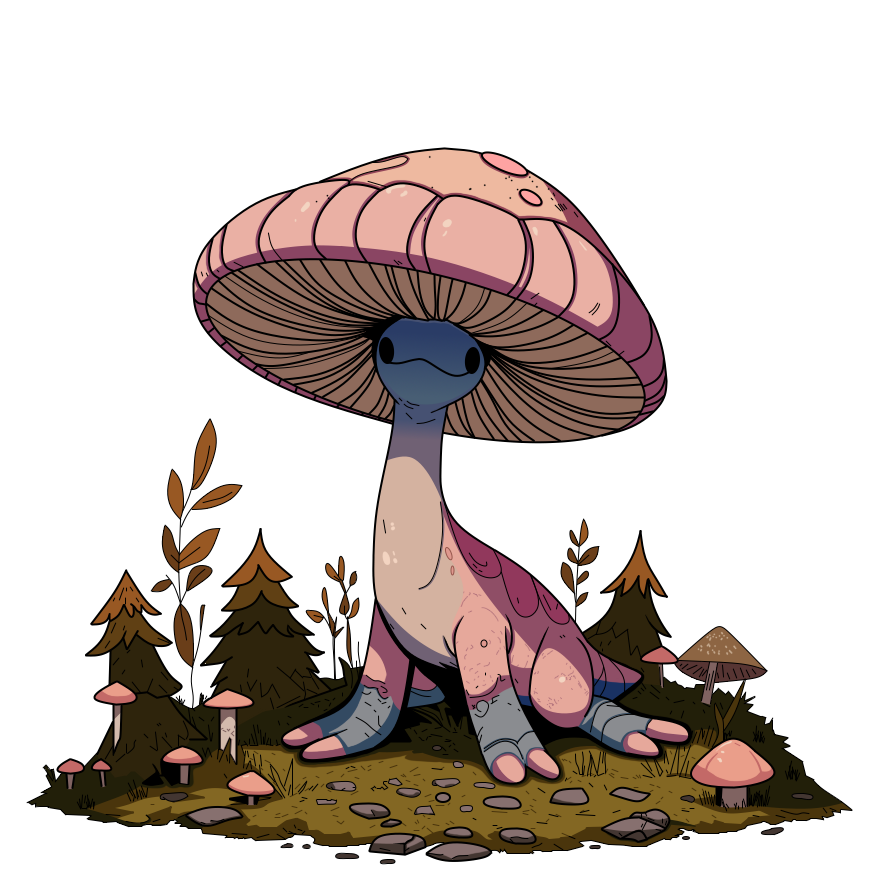
Estalons are friendly and rely on their mushroom-like appearance to blend into their environment and avoid predators. Their bodies are predominantly pink, transitioning into shades of blue on their legs and head. A defining feature is the large mushroom-like cap on their head, resembling the
Aurantiodotus Mushroom. Unlike the delicate mushroom it mimics, however, the Moosoo’s cap is reinforced with a dense protective layer, providing resistance against attacks. Moosoo's thrive in various forest environments but are most commonly found in the dense
Razmerath Forest, where fungal growth offers near-perfect camouflage. While naturally shy, some individuals have been domesticated, allowing closer observation of their feeding behavior. When feeding, a Moosoo digs its toes into the ground, extending small root-like structures that absorb nutrients and insects, delivering them directly to its body.